
Role-Play

Role-play, in two flavours

Role-play is the same machinery as the chat, aimed differently. Aim it at your book and it becomes a rehearsal room: interview the antagonist, argue with your own protagonist, test whether the duke's motive survives a hostile question. Aim it away from the book and it becomes an evening: the spider has run worse dungeons.

The two flavours are kept deliberately apart, so the rehearsal never leaks into the manuscript and the game never wears the work clothes.
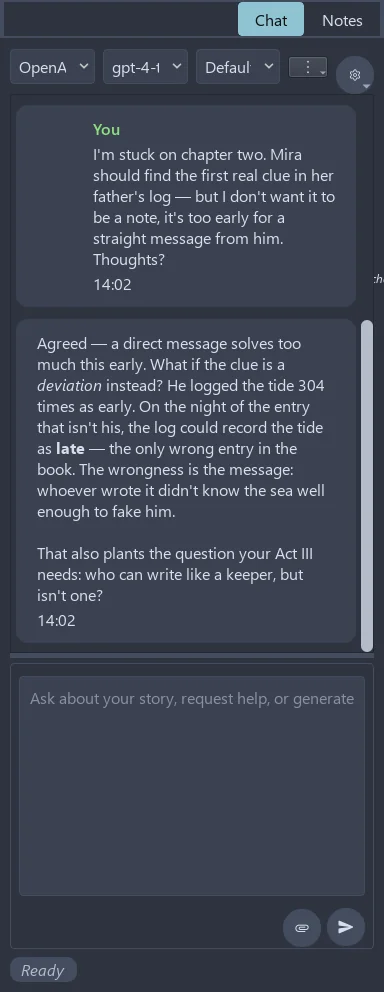
The AGIT chat panel showing a conversation thread with a character
The chat: a rehearsal room when aimed at the book, a stage when aimed away.

Pick a door

Roleplay for writing

Characters with voice profiles, scenes with stakes, and a counterpart that stays in character because it has read the compendium entry. Rehearse the confrontation before you draft it, and keep the transcript as notes. Roleplay for writing.

Roleplay for fun

No manuscript attached, no goal, no word counts. Set a scene, pick the players, and see where the evening goes — solo adventures, improv prompts, or the campaign your tabletop group keeps rescheduling. Roleplay for fun.

Same engine, your models

Runs on whatever AI you plugged in

Role-play sessions run through the same AI layer as everything else: your API keys, or a local model through Ollama. A local model makes a fine dungeon master and costs nothing per token — the dragon's hoard stays as free as the rest of the app.