
Non-Fiction

Non-fiction that keeps its spine

Non-fiction does not fail for lack of words — it fails for lack of structure. The argument drifts, the sources scatter, and the draft becomes a swamp with a conclusion somewhere in it. AGIT's non-fiction mode puts the spine first: the outline holds the argument, the boards hold the clippings, the editor holds the prose, and nothing sits in fifteen browser tabs.

The same desk that carries a novel carries the thesis, the whitepaper, the business plan and the recipe book — with templates for the shapes they usually take.
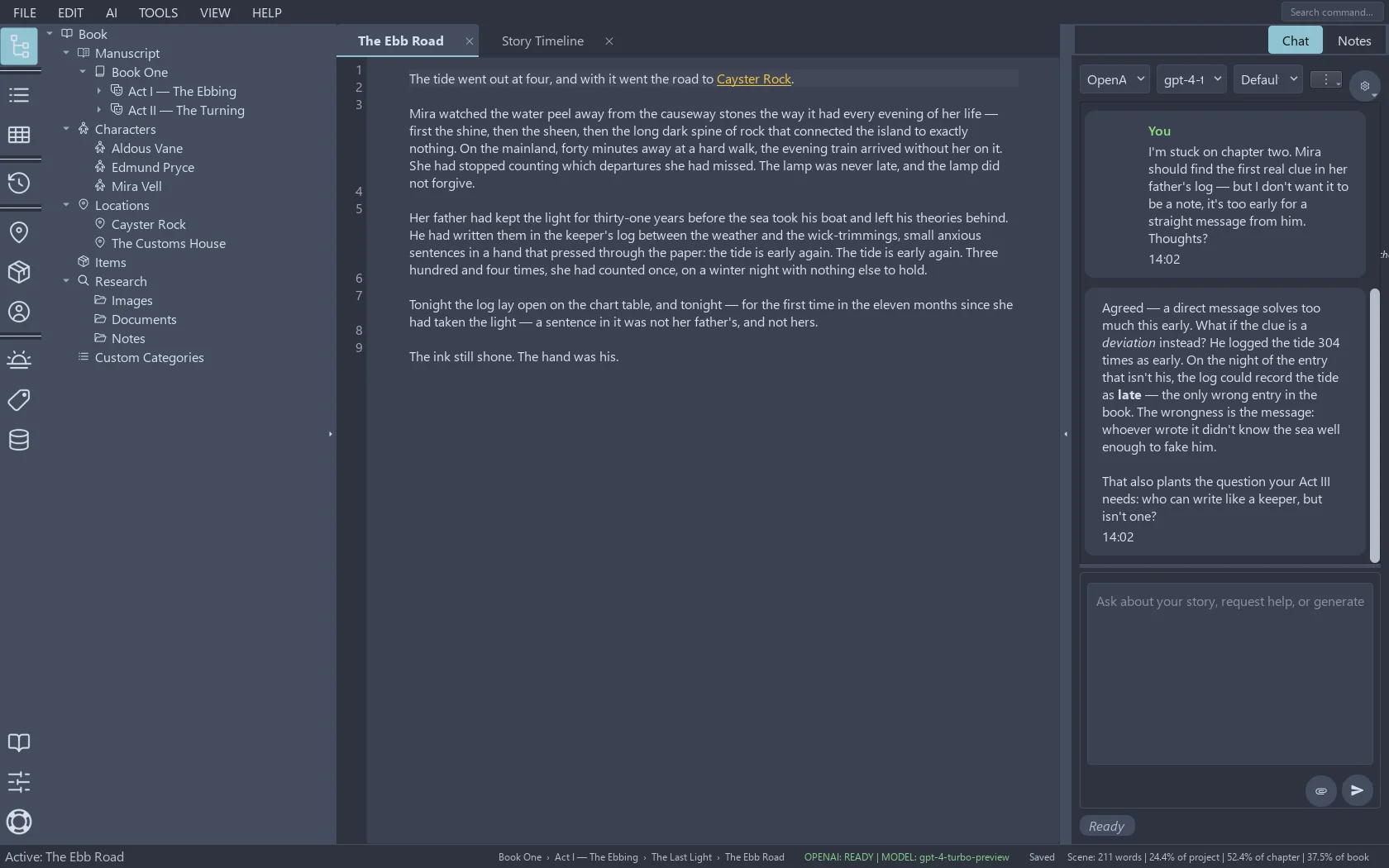
AGIT's editor showing a structured document beside the AI chat panel
The editor: a structured document, the project tree, and a chat that has read your sources.

The outline holds the argument

Structure you can drag

Essays and reports live in the same chapter-and-scene outline as novels, which turns out to be exactly right: an argument is a structure with sections, and sections reorder by drag and drop. When the conclusion needs to move before the methodology, you drag it — the document follows.

Word counts per section show where the weight of the piece actually sits, which is often not where you meant to put it.

Sources: imported, indexed, quotable

Every claim can find its receipt

Import the PDFs, DOCX files, EPUBs and web clippings behind the piece, and the local index makes them searchable by meaning. "Where did I read about the 2019 policy change?" is a search box away, with the source still on your disk.

Ask the chat to poke holes in the structure — it reads the draft and the sources, so "your second section contradicts the report on page four" is a criticism it can actually make. Better it finds the hole than the reviewer. The full import-and-index story has its own page.

Templates: the shape is already there

For the blank-page emergencies

AGIT ships templates for the usual suspects: academic papers, business plans, whitepapers, guides, documentation, screen, stage and radio plays — even recipes. Start from the skeleton, keep the muscles, delete the scaffolding when the piece stands on its own.

When the piece is done, it leaves in the shape the world wants: DOCX for the editor who lives in tracked changes, PDF for the committee, HTML or Markdown for the web, plain text for anything else. An audiobook exporter will even read your guide aloud, in case your audience prefers listening.