
Automation

Automation: the chores, scripted

Every long project accumulates chores that have nothing to do with writing: chapters renamed to match the new numbering, draft exports refreshed after each session, character cards tagged, the summary of last month's writing pulled together. Doing them once is work; doing them forty times is an insult.

AGIT's automation runs small Python recipes against your project — on your machine, with the output landing where it cannot clobber the manuscript. You can read every script before it runs; nothing ships in a black box.
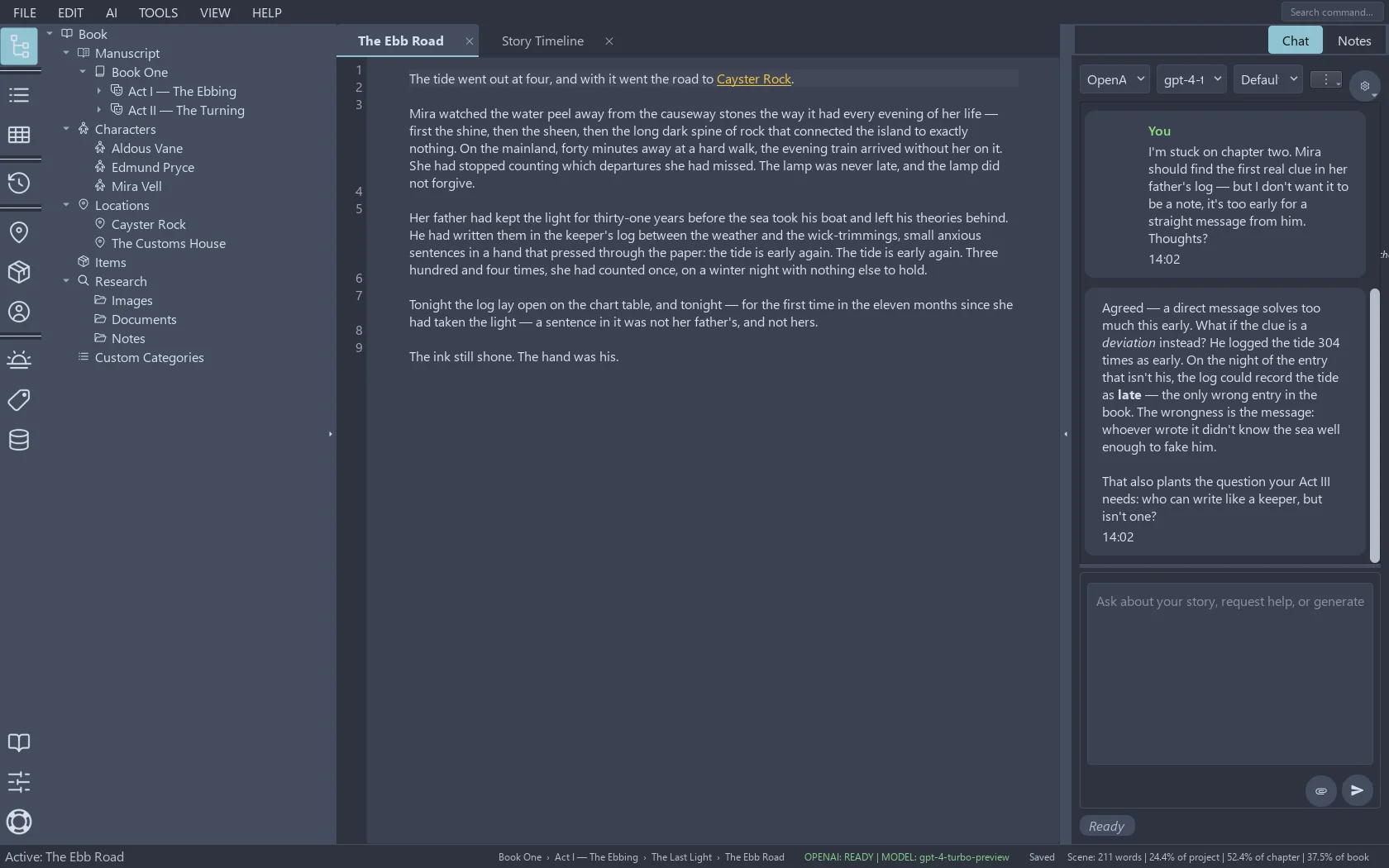
AGIT's editor beside the chat panel, where automation results can be reviewed
The desk stays yours; the scripts just take out the bins.

Recipes, with the shape shown

What a recipe looks like

  • Export on demand: rebuild the DOCX and EPUB exports from the current draft, so the copy you send your editor is never stale.
  • Housekeeping: rename scenes to the chapter.scene scheme, tag imported documents by source, clear the week's completed cards off the board.
  • Summaries: pull word counts and session history into one note, for the weekly review you keep promising yourself.
  • Mass checks: run the same question over every scene — which chapters still open with weather, for instance — and collect the answers in one place.

A recipe has clear inputs, a clear output, and a scope you set: the whole project, one book, or the scenes you selected. When something in the recipe cannot be done, the run reports what succeeded and what did not — silent partial failures are a defect here, not a quirk.

The rules the scripts play by

Fenced, visible, reversible

  • Scripts run on your machine against your project's files. There is no cloud runner and no account.
  • Output goes to the tool canvas — automation never writes into your prose by side effect.
  • Writes are transactional: a multi-step change lands completely or not at all, and snapshots mean a botched run is an inconvenience, not a loss.
  • Fan-out is bounded. A recipe that wants to call the AI forty times meets a cap before it meets your invoice, and background triggers stay debounced and content-gated.

If you can write a Python function, you can automate the boring half of your process. If you cannot, the AI can draft the recipe and you can read it before agreeing — that part never changes.